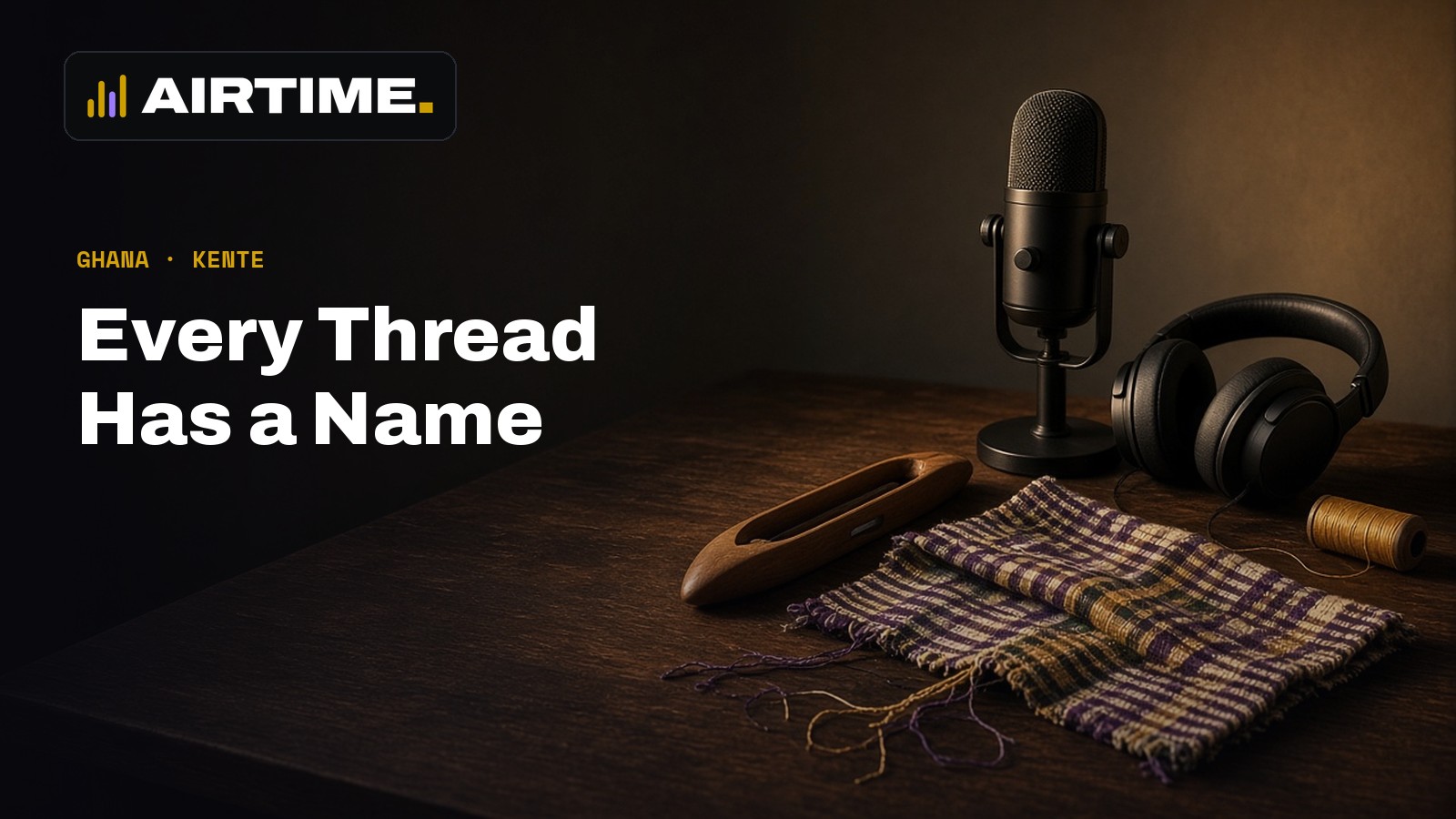
The Kente Registry, an archive of Ghana's Kente weavers, has released six episodes of its podcast Every Thread Has a Name since 24 October, under published rules on consent and credit.
The Kente Registry is building a public record of the weavers behind Ghana's Kente cloth, and now it has a podcast to go with it. Every Thread Has a Name is hosted by the Registry's founder, the journalist Phillip Nyakpo. It has put out six episodes since 24 October 2026, each between 10 and 18 minutes long.
The Registry has also put its rules in writing. In an explainer on why it made a podcast, published on 9 November, it says it asks for agreement before sharing anyone's story or voice, and aims to credit the weavers behind the cloth.
What is the Kente Registry podcast?
The Registry says it exists "to create a permanent, public record of Kente weavers and their cloth". The podcast, in its words, "gives those records a voice". The show's podcast page says the episodes cover weavers from Ghana's Ewe and Asante traditions, news from the Registry and the ideas that connect them.
Episode 1 puts a weaver at the microphone: master Kente weaver Frank Yao Agidi of Agotime-Akpokope, "in his own voice". Episode 6 reaches further back, to a recording Nyakpo made in 2003 while he was reporting for the BBC from Sekondi, in Ghana's Western Region.
Every episode sends listeners on to related records and further reading on KenteRegistry.org, which is why the Registry calls the show "a spoken companion to the Registry's work". Its case for audio is simple. "In Ghana, so much knowledge has long been passed on by word of mouth, at the loom and around it," the explainer says. A written record can keep names, places and techniques, "but it cannot convey the sound of a weaver describing their work in their own words".
How does it handle consent and credit?
The explainer lists four principles. On consent: "We seek agreement before sharing someone's story or voice. Participation should be informed and voluntary." On attribution: "Kente should not be treated as anonymous heritage. We aim to credit the weavers and communities connected to the cloth and the knowledge being discussed."
The other two are stewardship and openness. The episodes back up the Registry's documentation work and sit beside its written records rather than replacing them, and anyone can hear the podcast or read the records. The Registry is careful about its own role, too. It calls itself "a steward of the records it holds, not the owner of Kente or its traditions". Nyakpo's founder page traces the approach back to his reporting habits: "verify the source, attribute the statement correctly, and publish only what can be stood behind."
What do the first six episodes cover?
So far, mostly the Registry itself. Episode 2 tells how the idea started with Nyakpo's wife, Gabriella Nyakpo, who had come across the Scottish Register of Tartans. Episode 3 is titled "A charity, and what that means". Episode 4, "The people and the rules", asks the question any archive like this has to answer sooner or later: "Who decides what goes into a Kente Registry record, and what prevents favouritism?" (These details are from the Registry's show notes.)
The weavers are meant to take over from here. "In the episodes ahead, the series will turn more and more to the weavers and their cloth," the explainer says. There's no fixed release schedule. New episodes come "when there is another thread worth following", and they are free to hear on Apple Podcasts, Spotify and YouTube.
Why it matters
In our view, the most useful thing here is that the rules are written down where guests and listeners can check them. That makes a show easier to hold to its word. The other habit worth copying is tying every episode to a searchable record, so it stays useful long after it slips down the feed. Oral history shows such as The Bharat Connection from Nairobi could do the same.
"The measure of the podcast is not reach alone," the Registry says. Spending the first episodes on its own rulebook makes sense for an archive that is asking weavers to trust it with their names. The next run will show whether more of them come to the microphone, named and with their consent.
For more from Ghana, read about Nature Answers Season 4, or browse the Airtime podcast directory and our Learn section.
Subscribe to The Weekly Wave, our free newsletter on African podcasting.