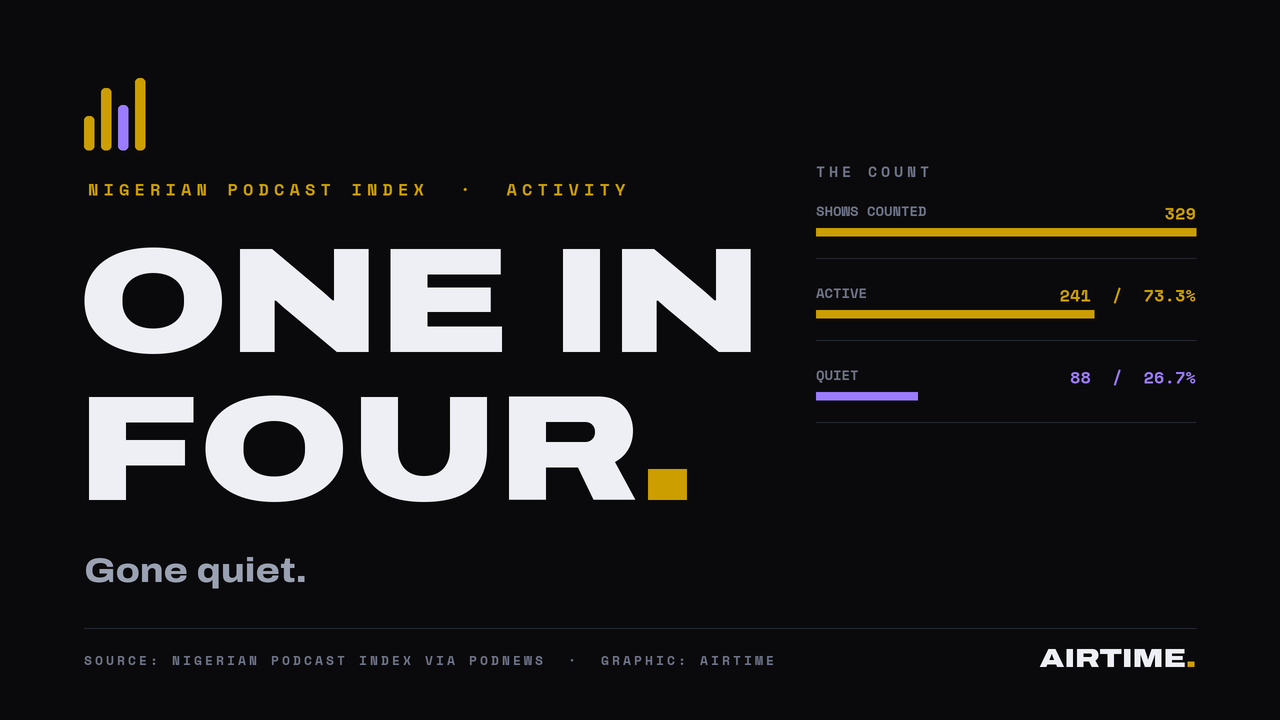
The Nigerian Podcast Index counted 329 shows. Of those, 241 (73.3 per cent) were actively publishing, and 88 (26.7 per cent) were inactive or on hiatus at the time of the count. More than one in four indexed Nigerian podcasts had already gone quiet. The figure everyone repeats is the gross total; the net, publishing number is a quarter smaller.
Every story about Nigeria's podcast census, including several of ours, opens with the same number: 329 shows. It is a good number, the first real count the country has had. It is also, read strictly, a count of podcasts that have existed, not podcasts that are alive.
The index is careful about this even when the coverage is not. Of the 329 shows it recorded, 241 were actively publishing, which it puts at 73.3 per cent. The remaining 88, or 26.7 per cent, were inactive or on hiatus when the snapshot was taken. So the honest description of Nigerian podcasting in early 2026 is not 329 shows. It is 241 shows still going, and a graveyard, or a waiting room, of another 88.
That quarter is the most useful part of the whole census, because attrition is the number every other statistic has to survive. A market can add titles quickly, as Nigeria clearly has. What tells you whether it is becoming an industry is how many of those titles are still publishing a year or two later. More than one in four having already stopped, at the very first time anyone counted, is a real signal about how hard it is to keep a Nigerian podcast going.
Adding shows is easy and Nigeria has proved it. Keeping them publishing is the hard part, and a quarter have already stopped.
It also connects the census's other findings into something that reads less like trivia and more like a diagnosis. We have written that three in five Nigerian shows sit on a single free host that does not pay them in their market, that the commercial scaffolding is only now being built, and that the medium is overwhelmingly English in a country that is not. Put a 26.7 per cent dormancy rate next to all of that and the shows going quiet stop looking like a mystery. A medium with no reliable income, thin production support and a narrow audience base is a medium that is hard to sustain past the early enthusiasm. The 88 are what that difficulty looks like counted.
The caveats here genuinely matter, more than usual, because dormancy is easy to overstate. Inactive or on hiatus is not the same as dead. Podcasts pause for a season and come back all the time, and some share of the 88 will already have returned since the count. The index measures publishing activity from metadata at one moment, so it captures a show that skipped a month as cleanly as one that stopped for good, and it cannot tell the difference. It counts titles, not listening, so a dormant show may still have an archive people work through. And 26.7 per cent is not obviously high for a young medium: plenty of blogs, newsletters and YouTube channels would show worse if anyone snapshotted them the same way.
What the number does, even hedged, is correct the frame. The exciting version of Nigerian podcasting is a growth story, 329 and climbing. The truer version is a retention story, 241 still standing and a quarter already fallen quiet, at the first count. Both are real. Only one of them tells you whether the shows being celebrated this year will still be publishing next year. When the index is run again, the figure worth watching is not whether the total passes 400. It is whether that 73.3 per cent active share holds, climbs, or slips.